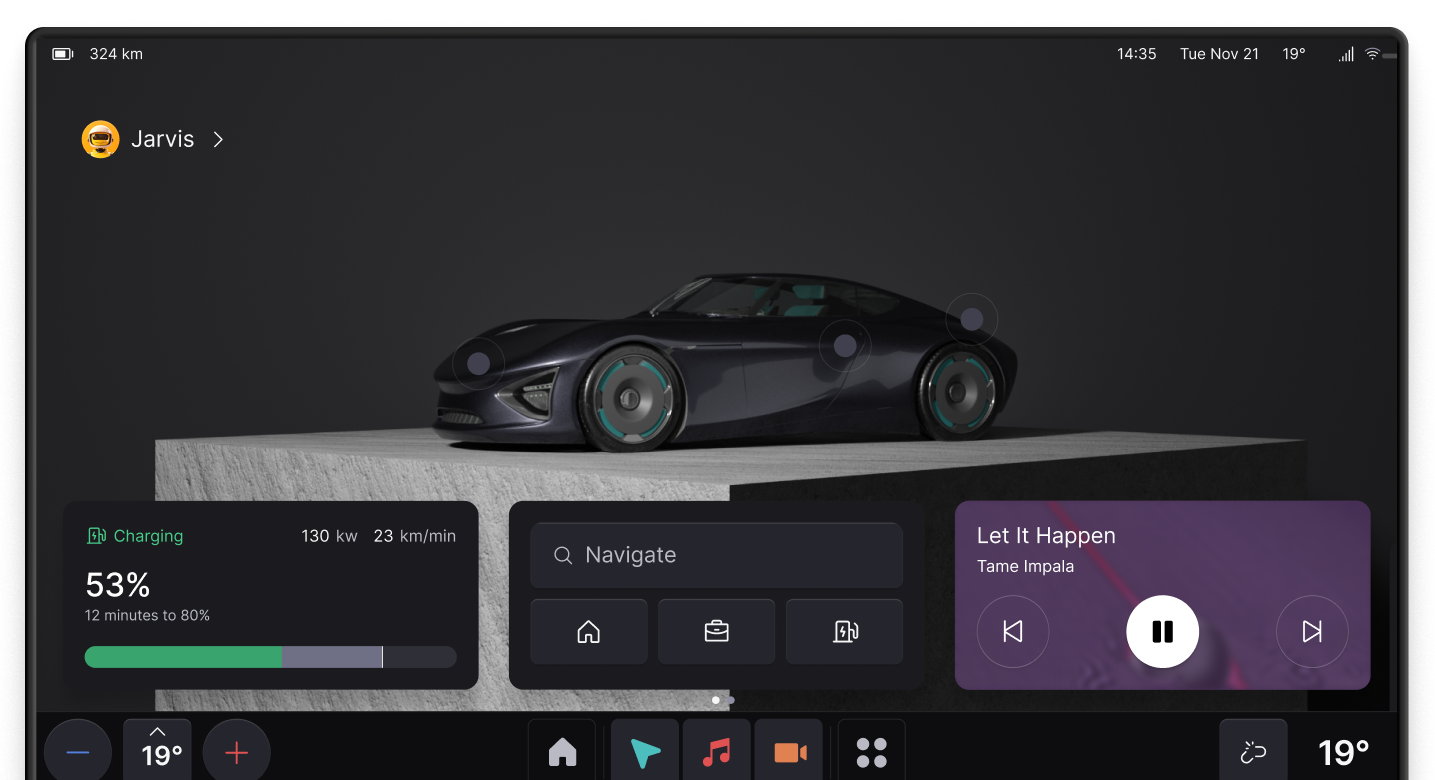
Designing SnappOS: A White-Label In-Car Operating System
Over the past two years, I’ve led the design of SnappOS: a white-label infotainment system built on Android Automotive. As Chief Product Officer and lead designer, I was responsible for the product vision, system architecture, and core user experience. Our goal was to help carmakers—especially smaller OEMs—bring a modern, safe, and customizable in-car system to market without building everything from scratch.
| Role | Product Designer & Chief Product Officer |
| Duration | 2 years |
| Team | 1 designer, 4-5 engineers, 1 QA engineer |
| Stakeholders | Internal teams at carmakers (Design, product, engineering), certifications and regulatory bodies, Hardware partners |
| Key Result |
|
Project Context
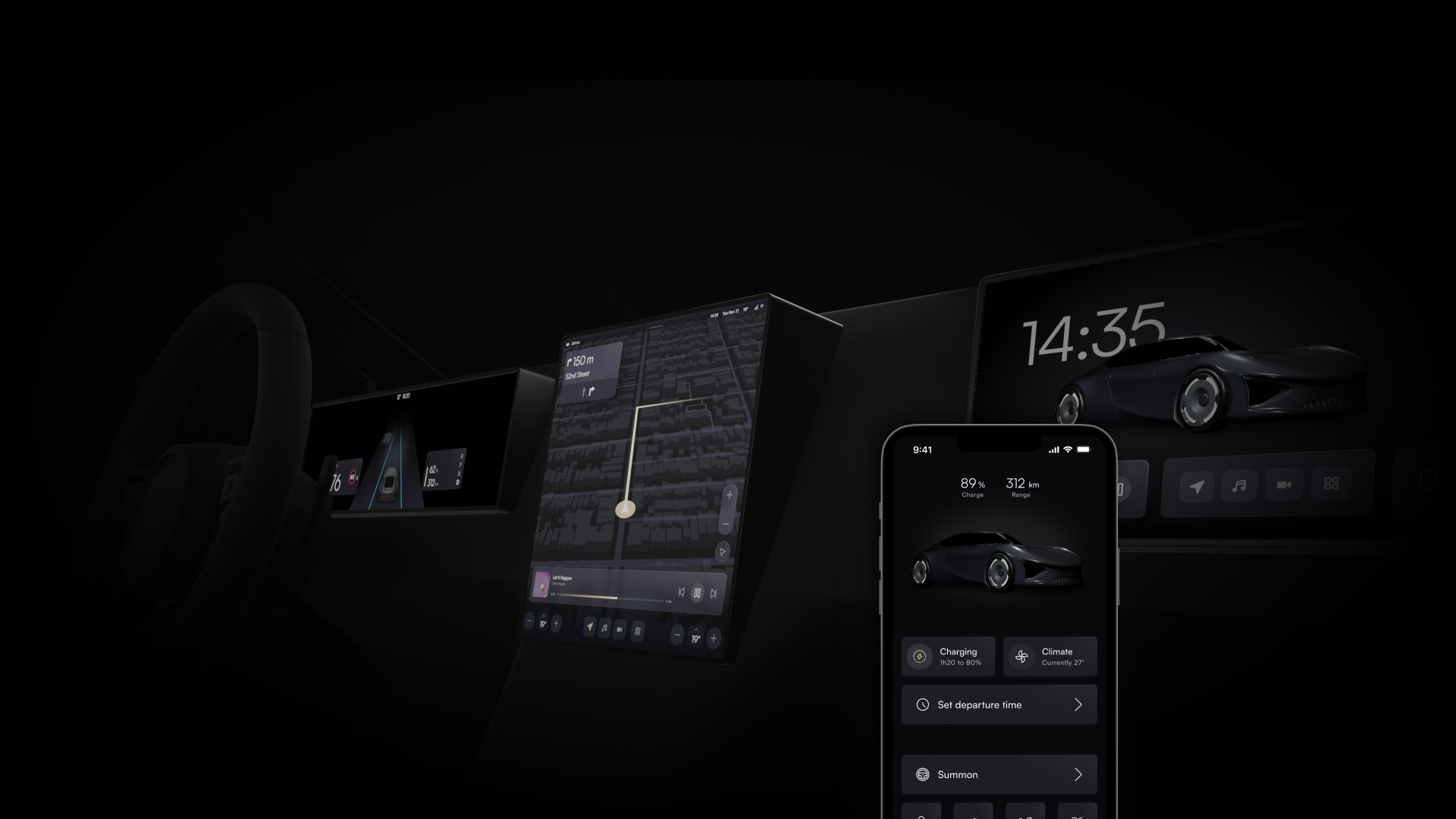
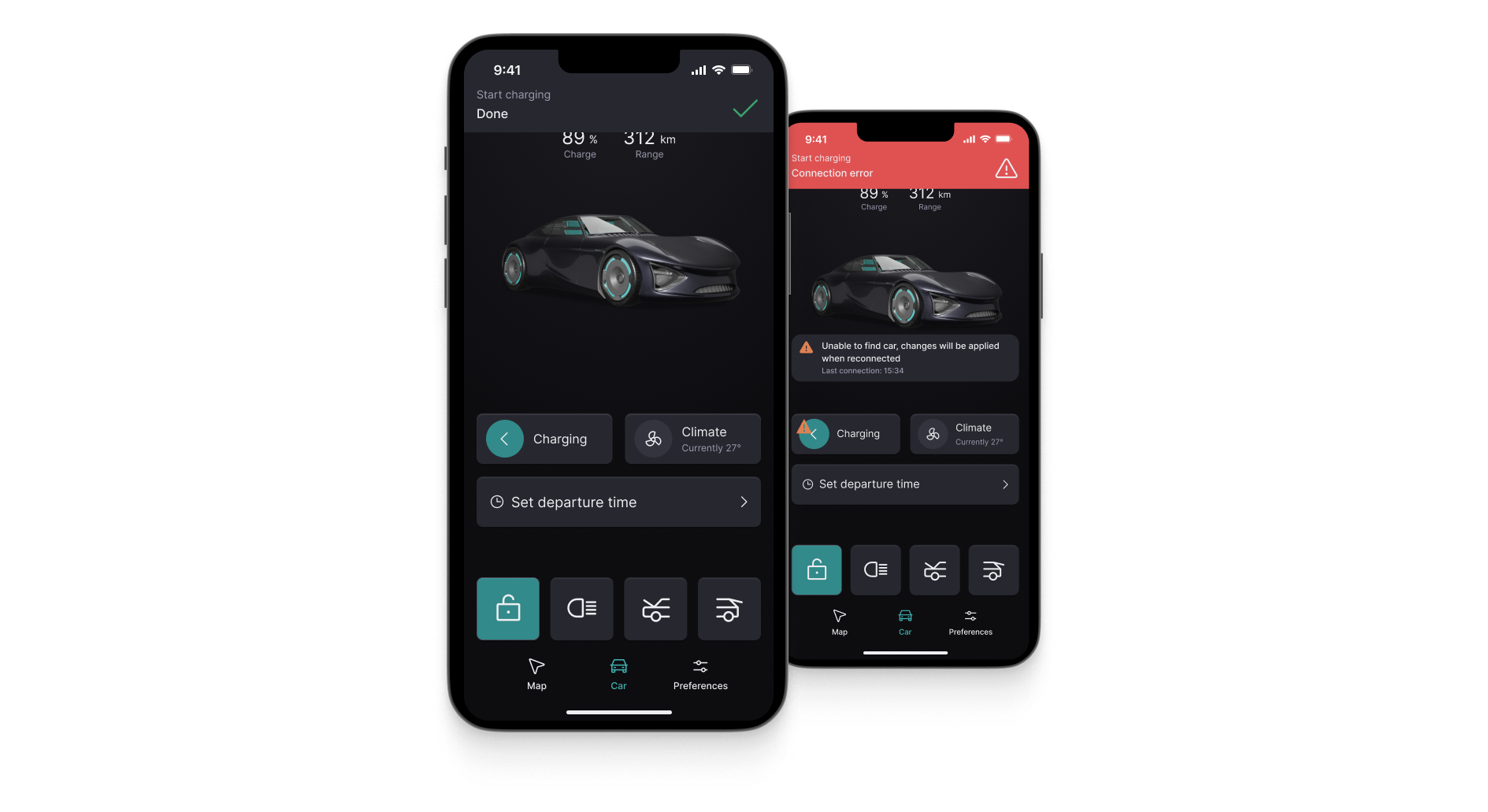
Many infotainment systems are overloaded, unsafe, and frustrating to use. Smaller carmakers often lack the time or resources to build their own. With Android Automotive gaining traction, we saw an opportunity to offer a white-label solution: a modular platform focused on the essentials. SnappOS adapts to different screen sizes and vehicle types, and includes a customizable UI layer, a theming engine, core apps, and a companion mobile experience.
Design approach
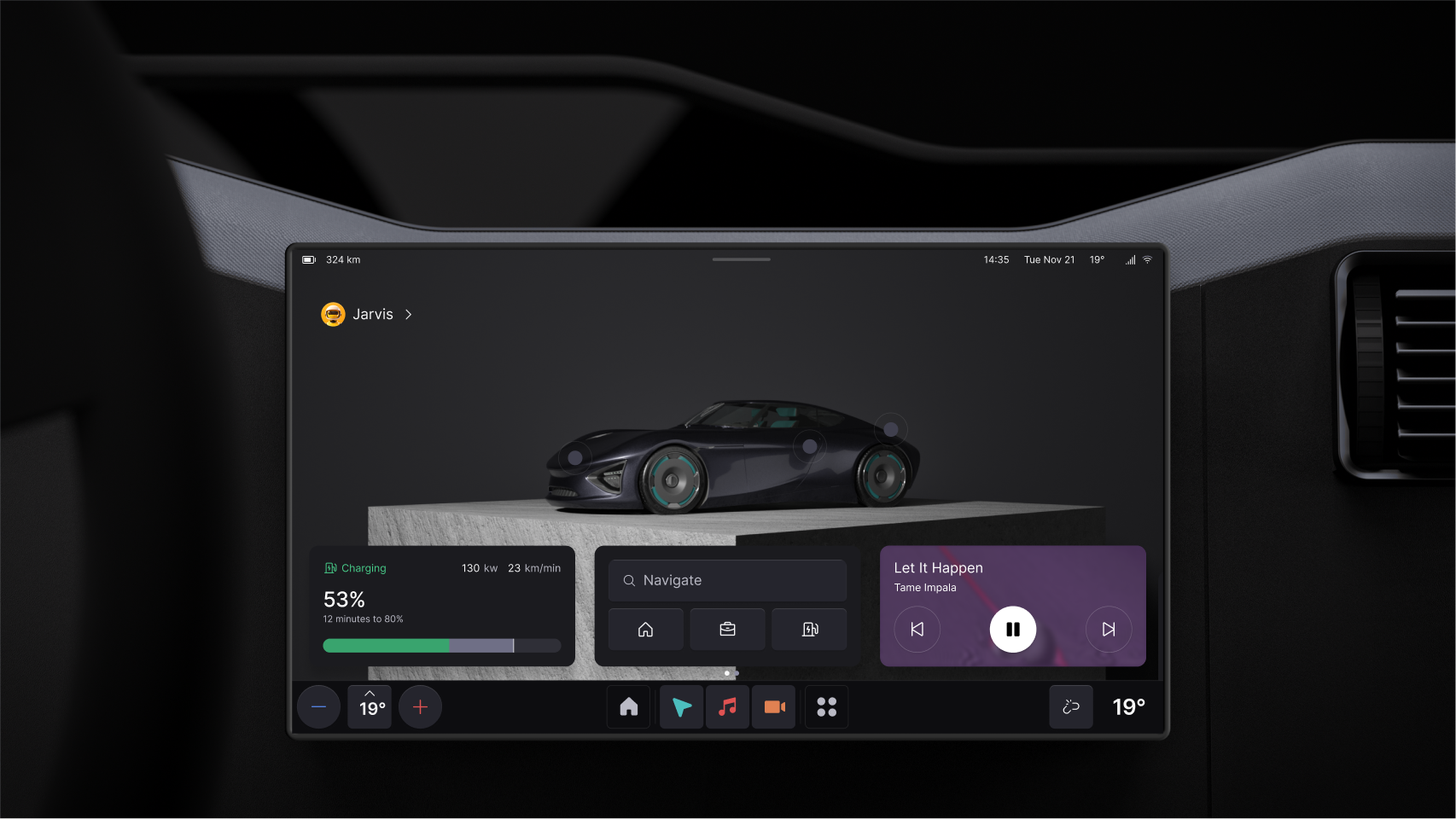
We started with user needs: most drivers just want music,
navigation, and quick access to controls. We simplified the system
around these core tasks, then prototyped everything in Android to
validate ergonomics and transitions in real cars. Testing and
prototyping were real challenges due to hardware limitations. I
worked closely with engineers to develop internal tools—like our own
firmware updater—so we could test and iterate quickly, even
remotely. Safety was central. We defined our own touch target and
typography standards based on in-car testing, and designed
affordances for high-stress driving situations.
Customization and Outcome
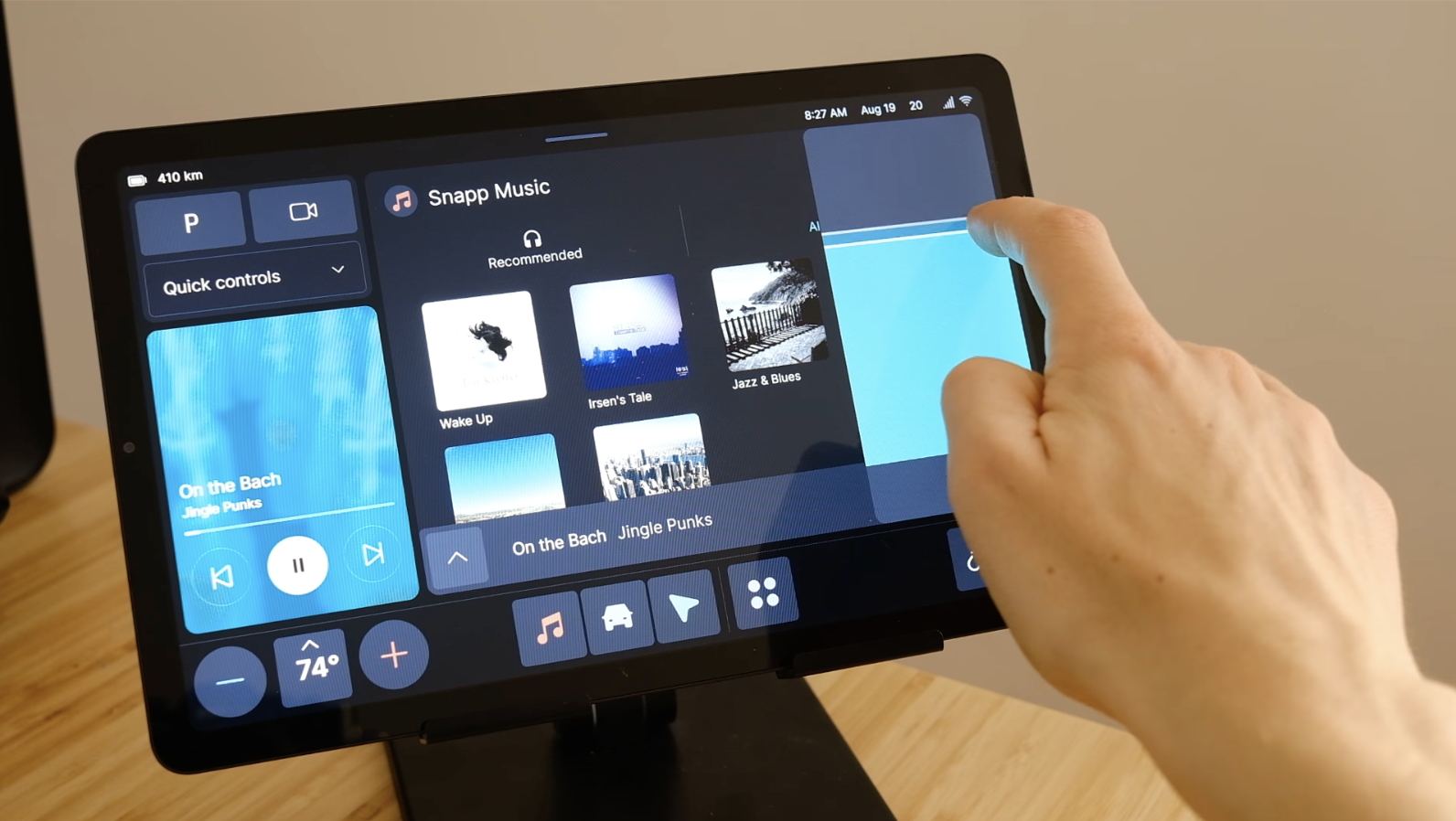
Our main selling point is the ability to fully customize the UI and branding. To support this with as little engineering effort as possible, we built a fully tokenized theming system that connects to both the UI layer and our Figma components. This lets OEMs fully reskin the UI without changing the core experience. This theming engine is used both in the car and in the companion app.
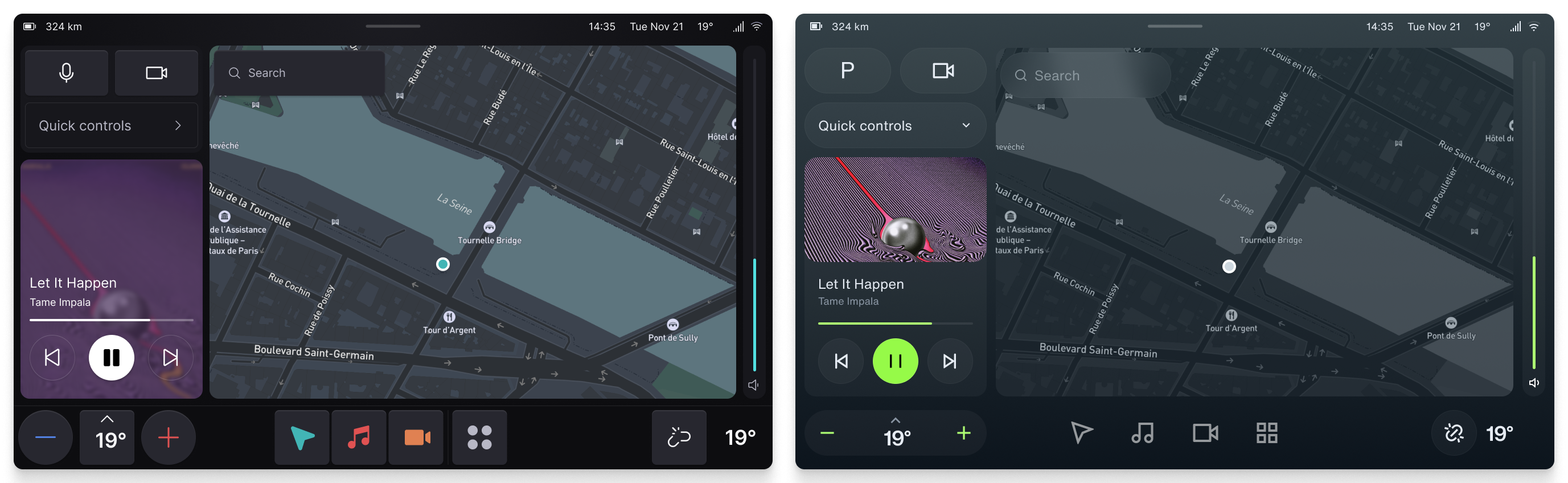
Today, SnappOS is being integrated with several carmakers and is customized for a range of vehicle types—from hypercars to car-sharing fleets. It's used as the in-car operating system for several small car brands, and is being adopted internally by larger OEMs as the foundation for their next-generation infotainment systems.
Full Case Study
Read the full breakdown with design rationale, technical details, and visuals.
